

- Home
- -
- Service Details
Asian Lantern Flies Spotted Lanternfly
Contact Us
Contact our local NYC Spotted Lanternfly treatment specialists for advanced landscape and tree pest defense.
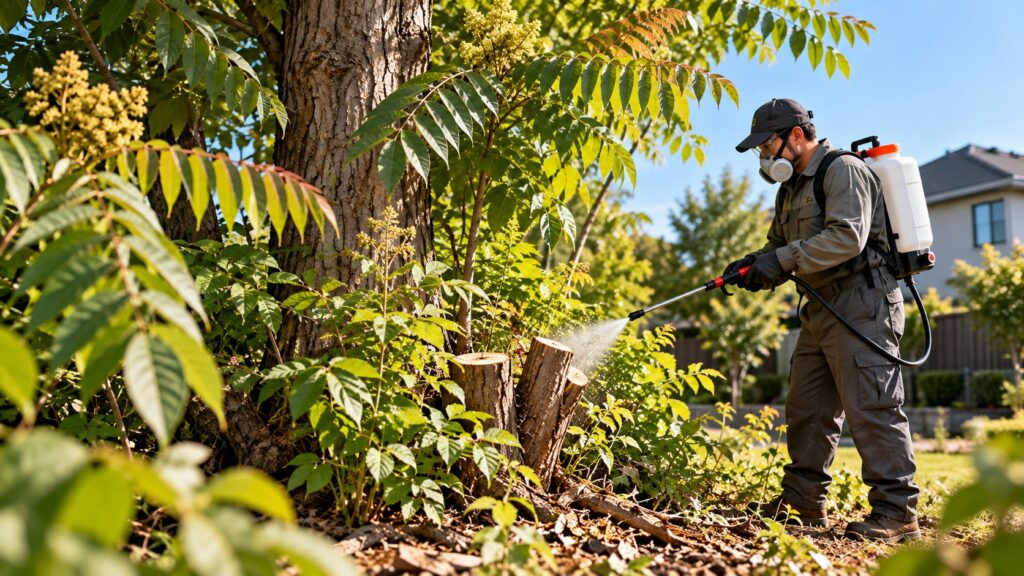
Cutting-Edge Spotted Lanternfly & Tree-of-Heaven (Ailanthus Altissima) Control
The Spotted Lanternfly (Lycorma delicatula)—an invasive hemipteran insect native to Asia—has rapidly become one of the most destructive plant and tree pests across New York City and Long Island. Drawn heavily to the invasive Ailanthus altissima (Tree-of-Heaven), lanternflies swarm residential yards, commercial landscapes, parks, and outdoor dining areas. They feed on sap, leaving behind a sticky substance called honeydew that fuels black sooty mold growth, damages plant foliage, and attracts swarms of stinging wasps and ants.
Don’t let spotted lanternflies destroy your trees, outdoor properties, and outdoor living spaces. Tri-State Pest Control provides specialized Spotted Lanternfly extermination, egg mass destruction, and system-wide tree treatments across Brooklyn and New York City.
Targeted Systemic Tree Treatments & Seasonal Lanternfly Prevention
Spotted Lanternflies multiply aggressively, laying mud-like egg masses on tree bark, stone walls, outdoor furniture, and building facades during the fall. If left unchecked, thousands of nymphs hatch in early spring, destroying decorative trees, agricultural plants, and outdoor commercial venues.
At Tri-State Pest Control, we deploy advanced entomological strategies to halt lanternfly lifecycles at every stage. Our certified technicians combine targeted bark sprays, systemic root injections, biological controls, and Ailanthus altissima host tree management to deliver precision protection without harming non-target beneficial species or surrounding ecosystems.
Protect your trees and property investment today. Contact Tri-State Pest Control at +1 718-635-9444 to schedule a professional lanternfly evaluation.
What we offer
We offer full-spectrum Spotted Lanternfly treatment and tree health protection for residential homes, commercial properties, and public venues throughout NYC:
- Host Tree & Landscape Inspections
- Spring Nymph & Adult Contact Sprays
- Systemic Trunk & Root Injections
- Commercial Property & Outdoor Dining Defense
Our key benefits
Choosing professional lanternfly extermination with Tri-State Pest Control safeguards your outdoor environment and preserves property aesthetics:
Preserves Property & Tree Health: Halts sap depletion, twig dieback, and honeydew mold accumulation on mature trees and ornamentals.
Eliminates Nuisance Outdoor Swarms: Keeps patio areas, backyards, and commercial outdoor venues clear of invasive jumping nymphs and flying adults.
Eco-Conscious Landscape Management: Targeted systemic applications minimize environmental drift and protect beneficial garden insects.
Proactive Year-Round Defense: Combining winter egg removal with spring/summer barrier applications for complete multi-season protection.
Frequently Asked Questions
Ailanthus altissima is the primary preferred host plant for the Spotted Lanternfly. The insect feeds on its sap to absorb plant chemicals that make adult lanternflies distasteful to local predators. Managing or treating Ailanthus trees on your property significantly reduces lanternfly swarms.
Spotted Lanternflies do not bite, sting, or carry diseases harmful to humans or pets. However, they cause severe damage to trees and plants, and their sticky "honeydew" secretions attract yellowjackets, wasps, and aggressive stinging insects to your yard.
Treatment occurs in phases: Fall and winter (October through April) are ideal for scraping and destroying egg masses. Spring (May to July) is best for targeting newly hatched nymphs, while late summer and fall (August to October) require systemic trunk treatments for adult swarms.
Systemic injections deliver active protective formulations directly into the root zone or trunk of the tree. As the tree draws up nutrients, the formulation spreads safely throughout the vascular system, eliminating feeding lanternflies without chemical overspray in your yard.